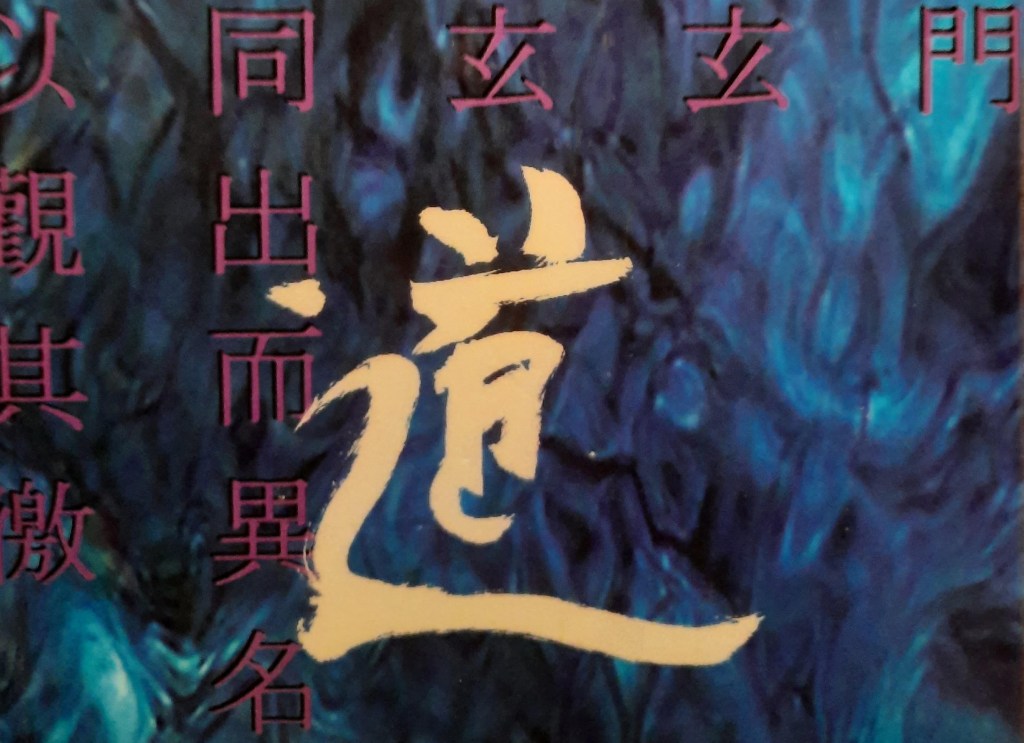
Laozi, Swedish translation by Stefan Stenudd
Somewhere in the intersection between philosophical and religious texts, there’s the Tao Te Ching. A central text to both philosophical and religious Taoism, and a source of inspiration for countless thinkers since it was written over two thousand years ago. Traditionally divided into eighty-one sections, although there are different translations and archeological findings that differ slightly from each other, describing the Way, Tao (道), and Virtue, Te (德).
As a modern reader, the Tao Te Ching strikes one as simultaneously ancient and modern, perhaps because of the many different translations and versions that have existed over the years, or maybe because of the general common sense in most sections. There is also an omnipresent vagueness throughout the entire work, leaving much to be interpreted by the reader. Because of this, it is possible to read the Tao Te Ching in a multitude of ways. One example of this possibility of viewing Laozi’s message through modern eyes is section 77, which can be interpreted as advocating socialism: “[…] The heaven’s Tao is taking from the overabundant / and giving it to the insufficient […]” (my translation to English from Stenudd’s Swedish translation). Still, it’s of course impossible to tell what Laozi really meant by these words.
The Tao is a mysterious force, permeating and preceding the entire universe, as hard to grasp and follow for peasants, kings, and gods alike. To follow the Tao is to be at peace with the universe and to adapt to the natural order, whereas to strive against it is a futile struggle that can only lead to suffering. The noble human lives according to the Tao, following the way without resistance, and through the way finds contentment and meaning. It’s an appealing idea, and many of the sections dealing with the Tao describe a happiness that is both tempting and achievable. True happiness isn’t really a state you reach through achievements, it’s reached through contentment. As in section 33: “[…] The one who knows when he has enough is rich […]” (again, my translation). Allow the Tao to guide you, and it’ll lead you to the best version of yourself and reveal the nature of the universe. However, it can never be truly comprehended, and its true name cannot be fathomed. Section 1: “The Tao that can be traversed / is not the eternal Tao / The name that can be uttered / is not the eternal name […]” (My translation). The Tao has many similarities with the Force in Star Wars, which was partly inspired by it.
Attempting to follow the Tao is the path toward virtue, Te. And to be virtuous is to follow the Tao. A virtuous person, according to Laozi and the Tao Te Ching, is content, conscientious, and lives in harmony with Tao and the world at large. The noble human is like water, flowing toward the lowest places, but powerful enough to break through walls and mountains. Water is gentle and soft, yet more powerful than the hardest and most massive rock. However, some of the ideas about what it is to be virtuous are so far from what is considered a good life in today’s mainstream culture that I doubt many would be willing to change their lifestyles. As in section 80: “[…] Even though they live within sight of their neighbors / and the cocks’ crowing and the dogs’ barking is heard from there / they shall age and die without visiting them.”(My translation). The noble human is content to the point that they find no need to travel, no reason to accumulate wealth, and no want for anything but the most necessary comforts. They find meaning within, rather than without. The noble human would be beneficial to the environment and detrimental to warmongering politicians, but cut off from nearly all forms of modern culture.
Even though many sections of the Tao Te Ching have value to offer even for a modern reader, and are worth considering even in a modern context, others haven’t aged as well. It seems apparent that Laozi never even considered democracy, perhaps not surprising considering the age of the Tao Te Ching. A multitude of verses deal with the matter of how a good ruler should act, and it is heavily implied that this ruler achieves the position through birth or by following the Tao, not through the will of the people or by aptitude. Someone who follows the Tao is expected to be content with their lot in life, no matter if they are born a peasant or an emperor. It is best for a ruler to leave their people to fend for themselves in most matters, as taking taxes and meddling in their affairs in general is against the Tao and will only lead to conflict and discontent. Then, one might argue, rulers aren’t really necessary at all in a Taoist world. However, some modern leaders might benefit from the advice in the Tao Te Ching aimed toward rulers, as it could be read as strict advice against micromanagement. Section 58: “When the kingdom is ruled by a gentle hand / the people are satisfied / When the kingdom is ruled by a strict hand / the people are plotting […]” (My translation).
The final part of Stenudd’s translation deals with the contested history of the Tao Te Ching, some of the archeological findings, and the difficulty of translating classical Chinese texts into modern Western languages. With illuminating examples and clear respect for the source material, he explains his choices between different versions and even provides a word-for-word translation into Swedish of the Wang Pi version of section 1. I also found his notes on the text itself useful, and appreciated the appendix where he gives his opinions on other translations to Swedish, English, and other languages.
Overall, I enjoyed reading the Tao Te Ching. It’s a slow read at times, shrouded in vague wordings and unclear meaning, but that’s what gives it its longevity and mystery. The reader is free to interpret it according to their ideals and lifestyle, and I believe everyone can find nuggets of wisdom in this ancient text.
I read the 2024 sixth edition of Stenudd’s translation, published by Arriba förlag. ISBN: 978-91-7894-046-2
 Tim Fahlstedt
Leave a comment